
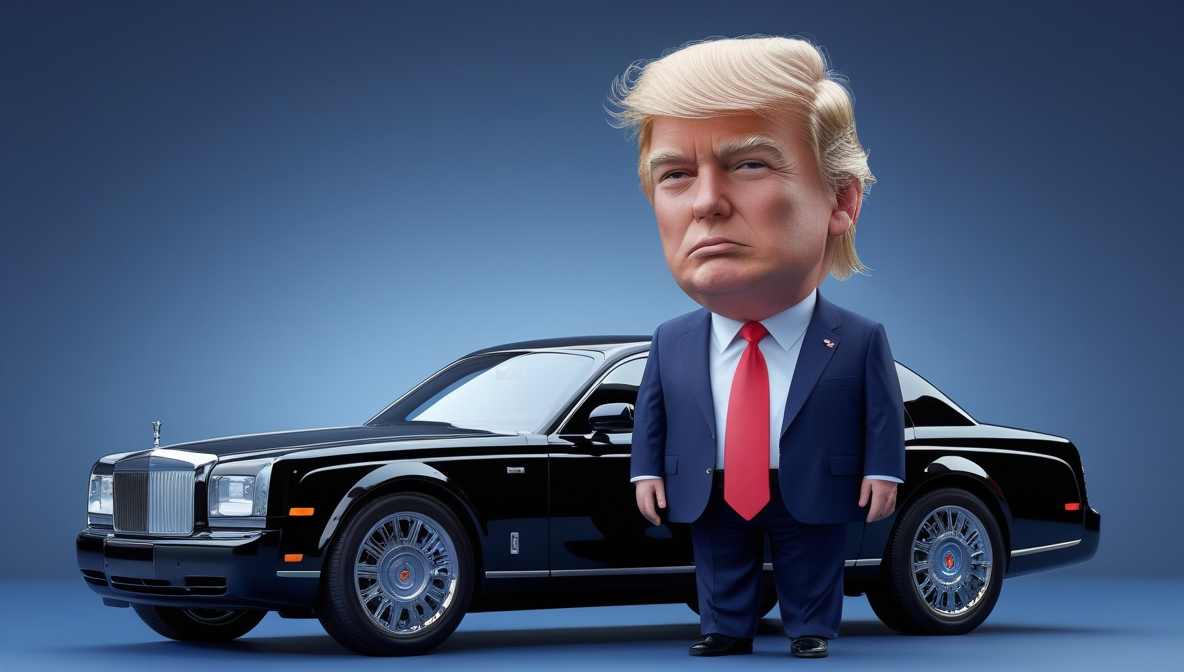
President Donald Trump signed an executive order on Wednesday introducing a 25% tariff on all vehicles produced outside the U.S., starting April 2.
"This order takes effect on April 2, and the tariff collection will begin on April 3," Trump said during a press briefing at the White House.
The tariff applies to imported sedans, SUVs, crossovers, minivans, cargo vans, and light trucks, as well as some automotive parts, including engines, transmissions, transmission parts, and electrical components, according to a White House briefing.
"If parts are made in America and the car is not, those parts will not be taxed, and we will have a very strong policy," Trump said.
The White House briefing also noted that automotive parts that are compliant with the USMCA will not be subject to the tariff until the country can implement a process for tariffing only non-American content of parts. However, the official statement specifies that the tariff will apply to parts no later than May 3.
"According to the Agreement between the U.S., Mexico, and Canada, car importers will have the opportunity to certify their content in the U.S. Systems will be implemented so that the 25% tariff will only apply to the value of their content that is not U.S.-sourced," the informational letter reads.
According to White House Press Secretary Caroline Levitt, Trump suspended tariffs on vehicle imports under the U.S.-Mexico-Canada Agreement following negotiations with companies such as General Motors, Ford, and Stellantis.
Before this pause, Trump stated that the tariff rate, which will also cover semiconductors and pharmaceuticals, would be around 25% and would increase throughout the year.
Automakers and parts suppliers fear the potential impact of the tariffs on the U.S. auto industry, especially since Mexico and Canada make up the majority of the country’s vehicle imports.
According to the International Trade Administration, about 76% of the approximately 3.5 million cars produced in Mexico in 2023 were imported to the U.S. Meanwhile, Canada exported about 93% of the vehicles it produced to the U.S. that same year, according to the Canadian Vehicle Manufacturers' Association.
Automakers have already made significant investments in U.S. manufacturing capacity to ensure flexibility in their production strategies, even before the Trump administration. Just this month, several companies announced new projects in the U.S.
On Tuesday, Hyundai announced it would invest $21 billion in its U.S. operations, including a $5.8 billion steel mill in Louisiana to support vehicle production at plants in Georgia and Alabama.
Tesla also recently announced plans to invest nearly $200 million in a plant near Houston.